The Geography of Endurance: Why Maritime Coalitions Outlast Land Empires
Ancient Athens maintained the preeminent naval force of the Peloponnesian War yet ultimately suffered total defeat. Oceanic supremacy functions less like an impenetrable shield and more like a continuous financial ledger where any coalition that exhausts its economic credit faces sudden collapse. As historian Sarah Paine and classical strategists including Alfred Thayer Mahan, Halford Mackinder, and Nicholas Spykman demonstrated, physical geography establishes the boundaries of strategic endurance long before armies mobilize.
The central geopolitical fault line runs between maritime and continental powers rather than along ideological divisions. Continental empires characteristically wield formidable short-term mobilization capacity and benefit from interior lines of communication. Over extended military and economic competitions, however, maritime coalitions consistently outlast them.
This structural asymmetry persists because logistics operates independently of territorial square mileage. While land armies moving across interior borders encounter friction and logistical degradation at hostile frontiers, maritime supply chains leverage the fluid medium of the ocean to provision coalition partners over decades. Long-term conflicts are decided by the capacity to sustain economic liquidity and food supplies when adversaries reach exhaustion.
The Economics of the Global Commons
Bulk maritime transport requires a fraction of the energy and infrastructure investment demanded by overland transit systems. Ocean-going freight moves at roughly one to three cents per ton-mile, compared with two to five cents by rail and eight or more cents by truck, without requiring paved highways, railway beds, or extensive maintenance brigades. Oceanic networks aggregate sovereign industrial capabilities across widely separated allies, generating an economic depth that single continental hegemons cannot match through internal taxation and coerced surplus extraction.
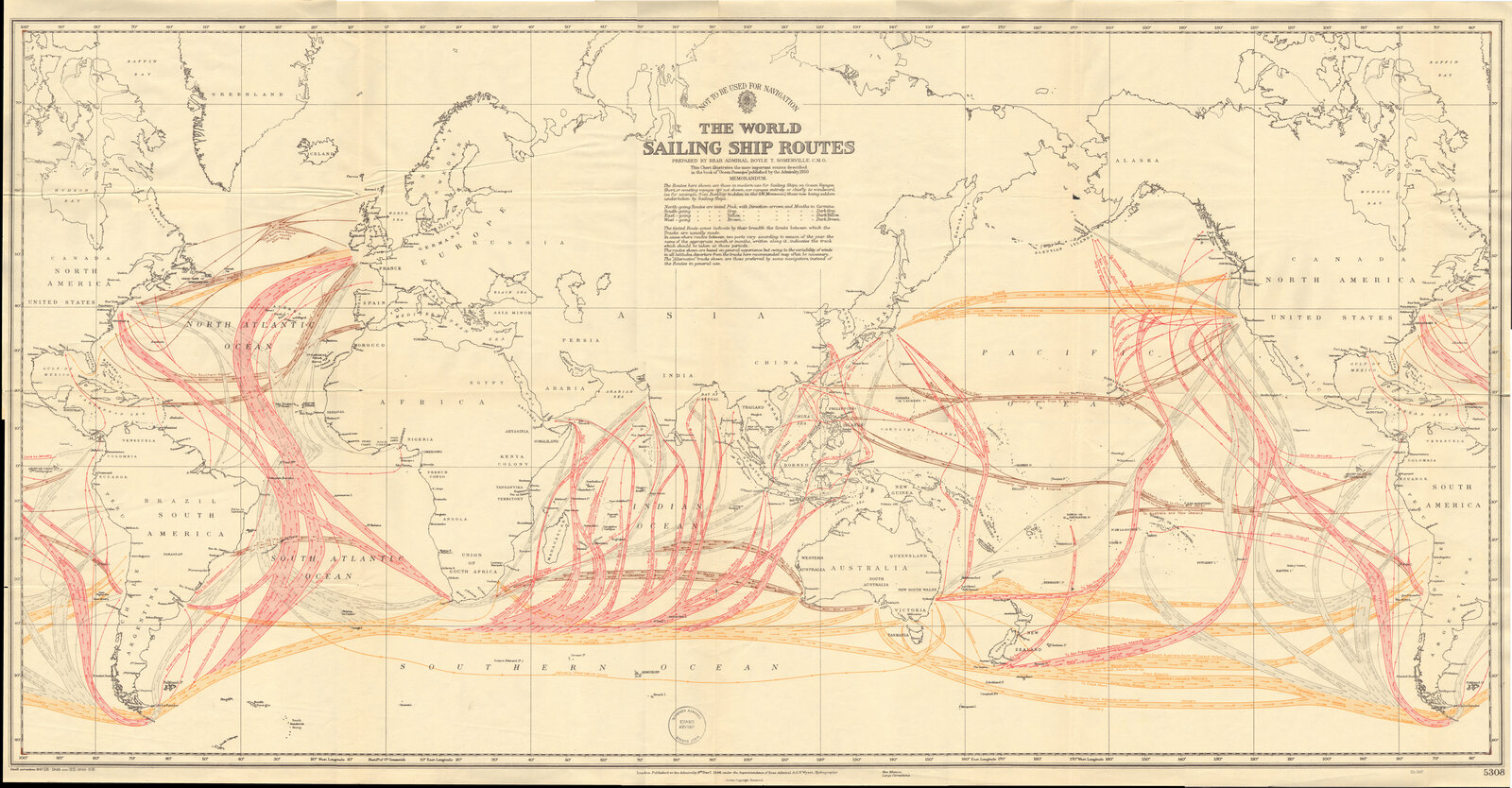
Historical evidence consistently supports this geographic reality. Nineteenth-century Great Britain established global preeminence by importing agricultural staples and raw industrial materials financed through capital markets anchored in London. During successive world wars, Atlantic convoys supplied Allied survival against continental blockades. While land empires must construct continuous infrastructure networks across hostile terrain to reach peripheral provinces, maritime coalitions direct commercial shipping toward flexible points of delivery. Furthermore, open financial markets allow maritime economies to borrow against future economic output, enabling coalitions to finance extended conflicts on anticipated wealth while continental autocracies consume their existing reserves.
Strategic Depth vs. Interior Lines
Historical case studies illustrate the persistent friction between continental and maritime strategies. Athens confronted Sparta and the Peloponnesian League; Great Britain mobilized coalitions against Napoleonic France, Wilhelmine Germany, and the Soviet Union. In each instance, continental adversaries exploited interior land lines to execute rapid military redeployments.
Despite these tactical advantages, maritime coalitions absorbed initial shocks by converting global trade into mobilization capital through international financial markets. Endurance in prolonged attrition conflicts depends on economic elasticity, the capacity to finance military operations long after initial mobilization peaks, and oceanic commerce supplies that resilience uniquely.
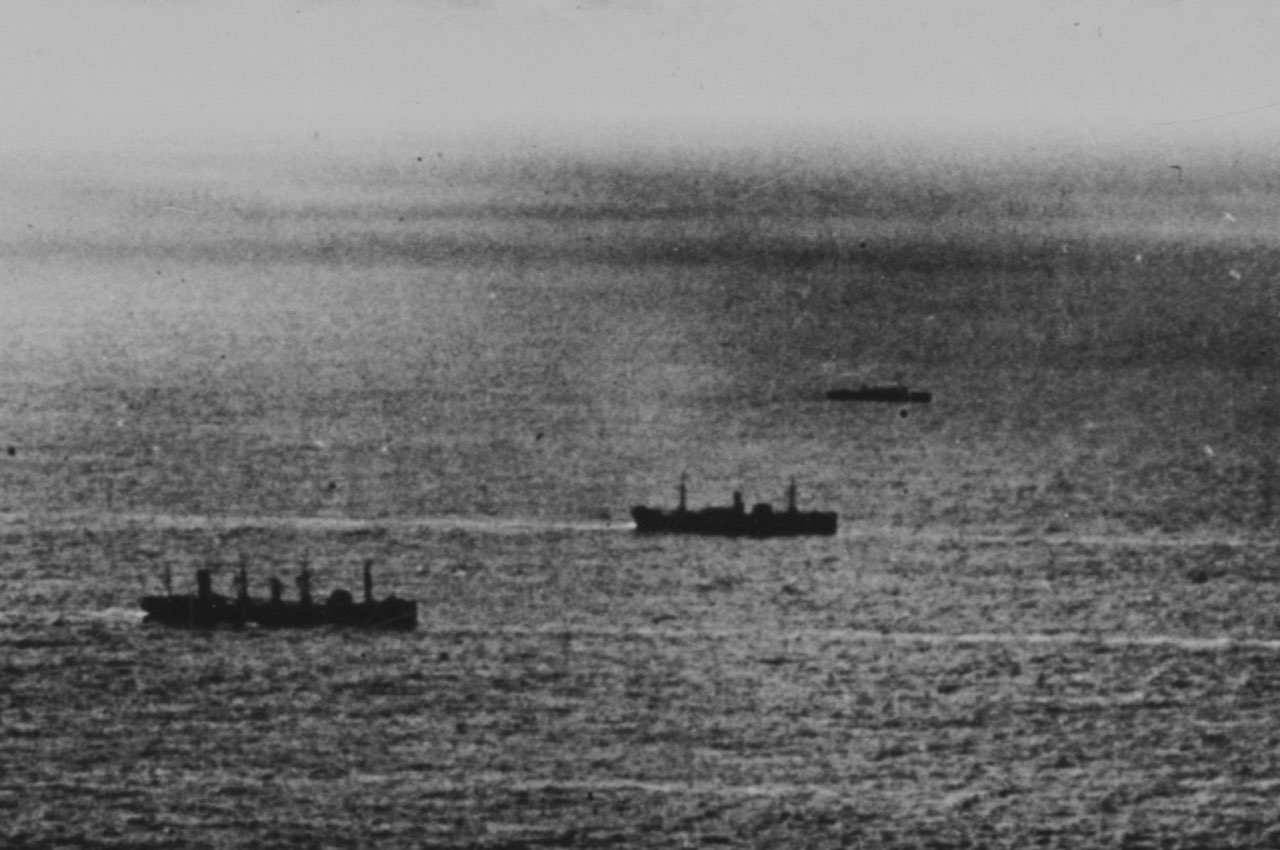
During the Napoleonic Wars, Great Britain maintained naval dominance while funding continental allies through capital markets in London, culminating at Trafalgar in 1805. Napoleon’s attempt to enforce the Continental System failed because the Royal Navy continued to tax continental commerce while French forces lacked the naval reach to suppress British trade. Similarly, during the First World War, British naval blockades restricted German imports to a fraction of pre-war volumes by 1918, while submarine campaigns in the Second World War tested allied convoy systems until antisubmarine victories in mid-1943 restored trans-Atlantic lifelines.
During the Cold War, the Soviet Union embodied continental land power, leveraging vast territorial depth and interior rail networks. Yet its centralized command economy failed to match the decentralized productivity of the Western alliance. NATO maintained open maritime communications across the Atlantic without needing to conquer landmasses, eventually outlasting the Soviet economic model.
The Continental Counter-Case: Interior Defense and A2/AD Realities
Arguments favoring continental power rest on substantial strategic advantages. Interior lines of communication simplify defense against blockades, while autarkic resource distribution insulates continental states from interdiction across narrow maritime choke points.
Furthermore, contemporary anti-access/area-denial (A2/AD) architectures, precision hypersonic missiles, and cyber threats targeting undersea communication cables challenge historical oceanic sanctuaries. Skeptics argue that modern military technologies erode traditional maritime insulation, neutralizing the cost advantages of ocean-borne trade against technologically sophisticated adversaries.
Historical precedent offers sobering reminders of these vulnerabilities. When Persian financial backing enabled Sparta to construct a fleet that trapped the Athenian navy at Aegospotami in 405 BC, Athens collapsed within months because its lifeline grain route through the Hellespont was severed. Control of the sea requires continuous defense; enduring economic capacity halts if maritime arteries are cut.
Yet maritime coalitions demonstrate continuous adaptation. By diversifying supply routes, hardening littoral infrastructure, and deploying redundant satellite and undersea communication pathways, naval powers preserve structural elasticity. Supply chains are shifting toward multi-port redundancy, and navies are pre-positioning repair and logistical depots closer to contested operating areas. These measures do not eliminate maritime risk, but they restore the operational freedom of movement required by allied coalitions.
Conclusion: The Future of Maritime Grand Strategy
Longevity in great power competition depends on secure access to the global commons and institutional trust among coalition partners rather than sheer territorial expanse. Trust enables sovereign states to operate with the economic cohesion of a unified market during crises. As contemporary geopolitical friction tests vital oceanic corridors, the underlying strategic equation remains unchanged: maritime coalitions retain the economic depth required to outlast continental rivals. Sea power endures by keeping the global commons open to commerce.