The Gated Seas: When Open Water Stops Being Open
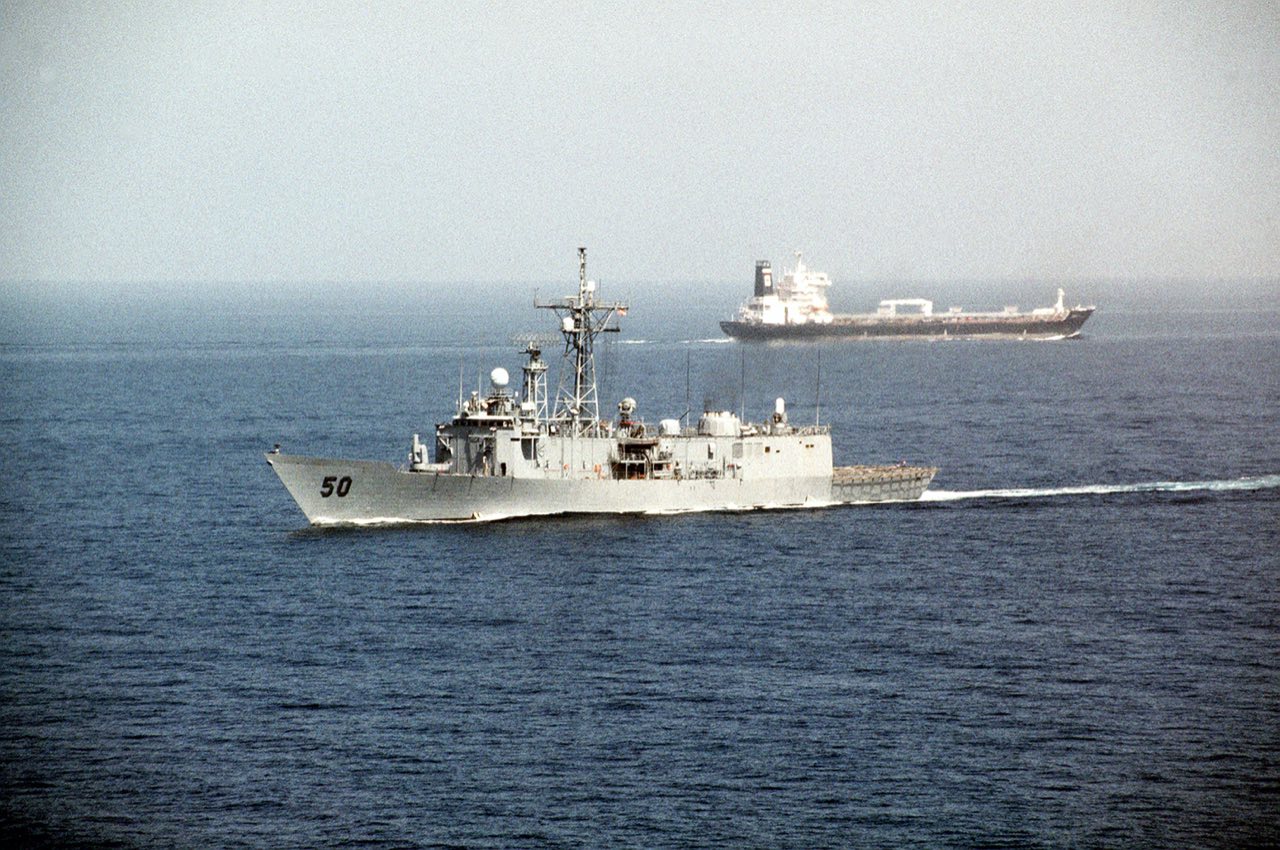
The Strait of Hormuz has effectively closed without a formal declaration or a traditional blockade. Analysts at the Royal United Services Institute (RUSI) observe that Iran accomplished this structural shift without laying extensive minefields or massing surface fleets to deny access outright. Instead, a calibrated campaign of targeted missile and drone strikes against commercial shipping, modest in total ordnance but devastating to commercial risk calculations, induced a collapse of transit volumes by approximately 90 percent, according to RUSI tracking. The vessels that continue through navigate north around Larak Island under active Iranian supervision along corridors prescribed by Tehran. Roughly 60 percent of that residual traffic consists of hulls that are Iranian-flagged, Iranian-owned, or directly tied to Iranian commercial networks. Consequently, the most critical petroleum transit corridor in the global economy operates under de facto Iranian management.
Access has transformed into a marketable political commodity. Under traditional maritime law governing international straits, passage is presumed open to all commercial vessels regardless of flag or cargo. The emergence of specialized regulatory authorities upends that legal foundation by requiring explicit transit permission and levying fees scaling up to two million dollars per voyage. Shipowners must submit detailed manifests covering cargo description, port of destination, corporate ownership, management entities, and crew nationalities. Authorization is distributed according to strategic alignment: vessels linked to allied states like Russia and China, alongside accommodating neutrals like India and Pakistan, receive clearance, while unaligned or sanctioned tonnage is left to idle, detour around the Cape of Good Hope, or abandon voyages entirely.
As Brookings Institution analysts Samantha Gross and Ryan Beane examine in their regional assessments, this operational model bypasses the escalatory dangers of traditional blockades while achieving identical economic coercion. States can exercise decisive leverage over international trade without halting it completely. By imposing discriminatory costs on targeted actors while subsidizing friendly operators, littoral powers capture the strategic benefits of closure while denying adversaries a clear justification for military escalation.
The Playbook for Gating a Commons
The mechanics deployed in Hormuz draw directly from conceptual work developed by the RAND Corporation regarding coercive quarantine. RAND analysts have demonstrated that operations designed to isolate territory, such as a hypothetical quarantine around Taiwan, succeed without victory in a general war. They require only the demonstrated capacity to control maritime and aerial spaces governing local cargo flows. Below the threshold of overt military conflict, an assertive regional power can establish that passage through sovereign or adjacent choke points operates exclusively on its terms. A similar methodology has been visible for years in the South China Sea, where paramilitary coast guard vessels and maritime militias gradually convert contested fishing grounds into controlled administrative zones.
The broader strategic commons, the expansive oceanic space assumed by maritime powers to be universally accessible, resembles a network of vulnerable gates rather than an open plain. Most of the time those gates remain unlocked and frictionless. Yet when a regional actor masters the art of selective restriction at the margin, it extracts substantial political compliance without risking general war. Beijing has studied this dynamic closely, hedging its heavy dependence on Malacca Strait oil imports through strategic stockpiling and overland pipelines while retaining coercive options for regional crises.
Why Hormuz Won’t Stay an Exception
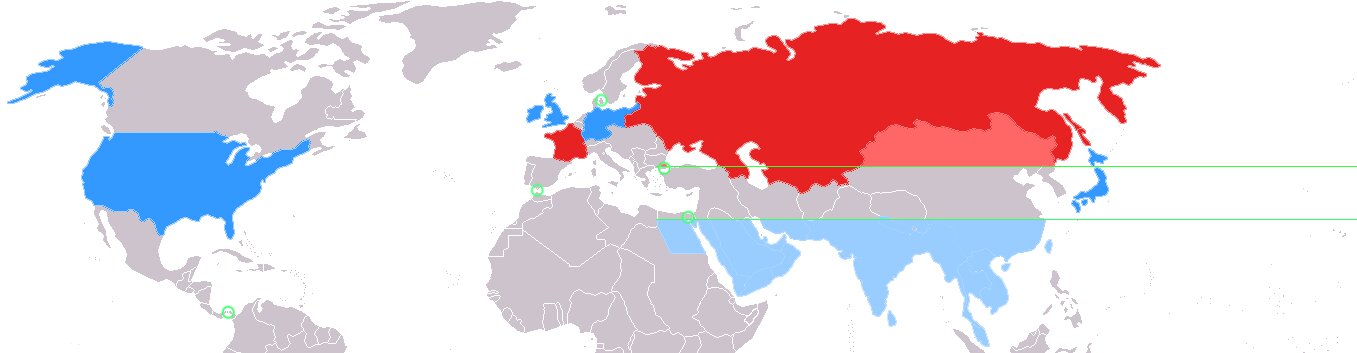
When War on the Rocks surveyed several strategy experts regarding the broader systemic implications of the Hormuz disruption, the findings pointed toward a systemic recalculation across major maritime chokepoints, including the Malacca Strait, the Taiwan Strait, the Panama Canal, the Suez Canal, and the Turkish Straits. Every critical passage faces the prospect of acquiring a price tag and a politically managed access queue.
Hudson Institute scholar Patrick Cronin has likened this transformation to a reverse Venturi effect. Narrow waterways that naturally accelerate commercial flow become choking points under threat, magnifying gray-zone coercion and driving up insurance and transit costs. The physical geography that makes a strait commercially indispensable also makes it uniquely vulnerable to political extraction.
This friction compounds an existing decay in international maritime norms. Washington and Beijing have spent years contesting regulatory control over the Panama Canal, while maritime disputes in the South China Sea continue to challenge binding international legal rulings. As Brookings observers note, competing interpretations of sovereign maritime rights are steadily eroding freedom of navigation as an international public good. Hormuz merely demonstrated how inexpensive such coercion has become.
The Old Frame Still Holds the Field
Classical geopolitical theorists anticipated these structural tensions. Alfred Thayer Mahan tied sea power directly to commercial exchange and its protection; Nicholas Spykman focused attention on the rimland, where continental masses and maritime networks collide. The friction observed in modern chokepoints represents the enduring competition between geographic imperatives: states whose power rests on continental interior defense versus those whose prosperity relies on open oceanic access.
Updating maritime strategy requires redefining what command of the sea entails. Historically, command meant defeating opposing fleets in decisive battle. The Hormuz crisis illustrates that a regional power can degrade the reality of open transit without risking its navy by conditioning access vessel by vessel. The global commons are not captured outright; they are subjected to continuous administrative toll collection.
Examining the Counter-Argument
Counter-arguments to the gated-seas thesis rest on substantial empirical grounds. First, economic resilience often absorbs regulatory friction. Brookings calculations suggest that even a two-million-dollar transit fee adds roughly one dollar per barrel to petroleum prices, an increment that global markets readily absorb. Shipping networks have historically routed around disruptions through extended voyages and larger inventories.
Second, historical precedents suggest that coercive gatekeeping can be challenged. During the 1980s tanker war in the Persian Gulf, Kuwait requested international protection against Iranian attacks. The United States reflagged eleven Kuwaiti tankers and provided naval escorts through operations documented by USNI Proceedings as among the most complex surface escort missions since the Second World War. That campaign involved significant hazard, including the mining of the USS Bridgeton, and operated under strict rules of engagement that protected only reflagged vessels while leaving unflagged third-party shipping exposed. While the mission maintained the flow of protected oil, USNI retrospective assessments characterized it as an expensive stalemate rather than a restoration of universal freedom of navigation.
Third, military intervention to reopen a contested strait remains exceptionally hazardous. RUSI analyses emphasize that air and missile defense umbrellas cannot completely suppress distributed mobile drone and anti-ship missile launchers positioned along narrow coastlines. With the Strait of Hormuz measuring roughly thirty kilometers wide, well within modern precision engagement envelopes, naval escorts operating in confined waters constitute high-value targets. Consequently, the commercial viability of passage depends less on naval bombardment than on the willingness of war-risk underwriters to issue coverage at sustainable rates.
The Danger of Normalization
The primary systemic hazard identified by Brookings and RUSI analysts is the normalization of politically conditioned access. Once discriminatory transit fees and alignment-based passage rights become accepted practice, other regional powers have every incentive to establish equivalent toll gates. The United States risks sliding into this same transactional framework by participating in selective escort coordination and favoring allied traffic. The resulting international architecture features fragmented corridors where universal openness is replaced by bilateral extortion.
Preventing this outcome requires active contestation of discriminatory practices at the margin, coupled with burden-sharing arrangements that discourage individual states from monetizing security for geopolitical loyalty. As Brookings policy recommendations suggest, great powers must avoid validating discriminatory regimes and maintain credible deterrence against excessive maritime claims.
The underlying struggle for the global commons remains unchanged. Sea power has never been about winning a single engagement; it has been about preserving the unbroken continuity of trade. When the cost of open water is determined by whoever seizes the choke points, the survival of maritime coalitions depends on their capacity to bear the economic price of universal access rather than accepting the managed fragmentation of the seas.